The chainsaw was originally invented to help women give birth.
Childbirth is always painful, but it used to be a lot worse. Especially if, for example, the baby wouldn’t fit through the mother’s opening.
If the baby was too large, or turned the wrong way, the opening had to be widened. This involved cutting away bone and cartilage, and lots of pain.
The medical tools of the time were knives, saws, chisels, and mallets.
The process was called a symphysiotomy: the pelvis had to be cut and expanded to make the opening wider.
It was inefficient because only the forward strokes were actually cutting. It was clumsy because the woman had to be held down while being pushed and pulled.
Two Scottish doctors decided what was needed was a saw that would cut without all the pulling and pushing.
James Aitken and James Jeffroy invented the chainsaw, a tool with a row of saw-teeth that was hand-cranked, it would cut continuously with no pushing or pulling. The surgeon simply held the chainsaw in place and turned the crank.
It was invented for intimate, delicate surgery, that was where the idea started.
The invention was pure creativity, but what came next was applied creativity.
In 1905, Samuel J Bens saw the chainsaw principle of continuous motion and adapted it for logging.
When men sawed back and forth, the constant stop-start motion wasted energy.
With a chainsaw the movement was in one direction, there was no wasted energy.
But enlarging the chainsaw up to tree-felling size meant it was cumbersome and still had to be cranked by hand.
Which is why, in 1929, Andreas Stihl invented the petrol-powered chainsaw.
Eventually, in the 1950s, it became smaller and portable to the point where today one person can operate a chainsaw on their own.
Where the idea for the chainsaw started was PURE creativity, what happened next was APPLIED creativity.
Someone had an idea, then someone else put that idea to a totally different use. That’s the way it is with ideas.
There are a lot of posts and podcasts online about entrepreneurs and the brilliant ideas that they all invented from scratch.
But usually ideas don’t start from scratch, usually ideas happen by repurposing an existing idea in a way that no one else has thought of.
As advertising creatives that’s where we should be looking, not pure creativity (we’re not artists) but applied creativity (we are business people).
We need to look in different disciplines for ideas we can use in new and different ways.
We don’t have to invent anything from scratch, we just have to search different fields to see what we can adapt.
Let’s take a look at some advertising examples (click on these names below to see the work):
Al Waldie was the first to use surrealism, for Benson and Hedges.
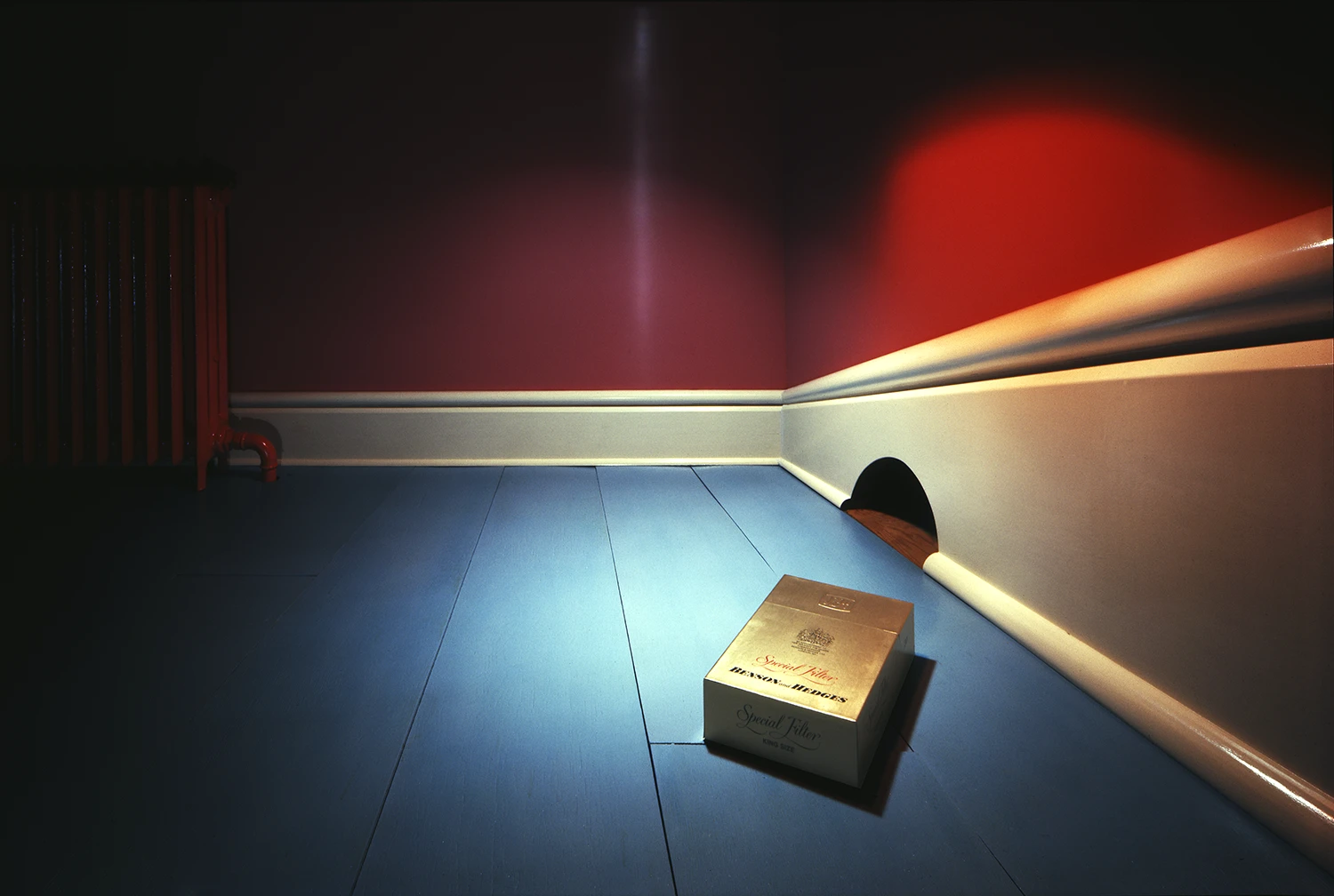
CDP used Dvorak’s ‘New World Symphony’ for Hovis.
John Webster used Giacometti for the Royal Bank of Scotland.
Paul Arden used Argentine artist Luciano Fontana for Silk Cut.
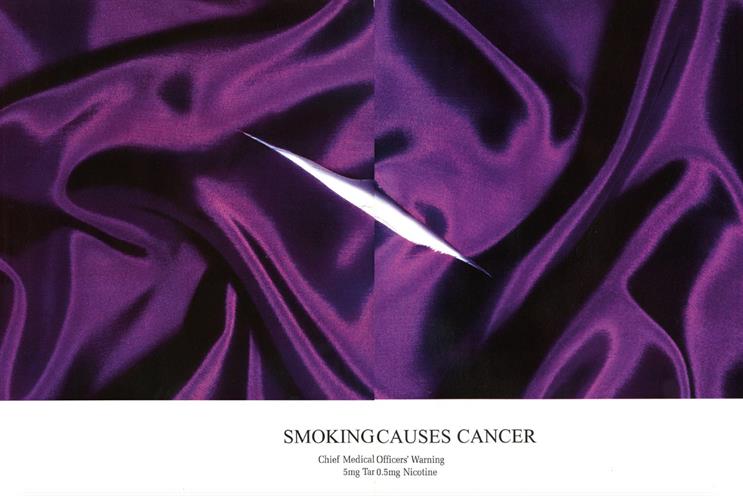
Dave Waters and Paul Grubb used Arcimboldo for Nurofen.
Me and Paul Arden used Gilbert & George for Third World Debt.
Saatchi and Graham Fink used Delibes opera Lakme for British Airways.
AMV and Tom & Walt used a 1893 Walter Crane painting for Guinness.
We don’t work in the world of pure creativity, we aren’t artists we are business people, we work in the world of applied creativity.
Thousands of years of culture, worldwide, is waiting to be used in new and surprising ways.
As Jean-Luc Goddard said: “It’s not where you take things from, it’s where you take them to.”
Great post. Also Nintendo used Miyamoto who was a cartoonist instead of a programmer and he invented Mario and Donkey Kong – the first character driven computer games